
Directing an interview is key to capturing great content. Whether you’re working on a documentary, corporate video, or personal project, it’s important to help your interviewee shine.
This guide will help you navigate video interviews using digital equipment to ensure everything runs smoothly and looks professional.
What a Video Director Does
As video directors, our role is to manage both the technical and creative aspects of the interview. This means coordinating with the crew, setting up equipment, guiding the interviewee, and ensuring the final product is high quality. Key skills we need include good communication, technical proficiency, and a keen eye for detail.
Camera, audio, and lighting are your three musketeers for interview video production
Choosing the right camera is fundamental for capturing clear and detailed footage. High-definition cameras, such as DSLRs, mirrorless cameras, and professional camcorders, are popular choices.
Equally important is good audio equipment. Investing in high-quality microphones, like lapel mics or boom mics, ensures clear and crisp sound. Always have backups and proper audio recording devices on hand.
Proper lighting also plays a crucial role in the quality of your video. Use softbox lights, LED panels, or natural light to create a well-lit environment that eliminates shadows and highlights the interviewee.
How to Set Up Your Equipment for Interview Video Production
Step-by-Step Camera Setup
First, position the camera at eye level with the interviewee to ensure a natural and engaging shot. Make sure the subject is in sharp focus to avoid any blurry footage. To keep the camera steady, use a tripod.
Configuring Audio for Clarity
Next, position the microphones close to the interviewee but out of the camera frame to capture clear audio. Perform a sound check to adjust levels and minimise background noise. Additionally, use a secondary recording device as a backup to ensure you have clear audio.
Arranging Lighting for Best Results
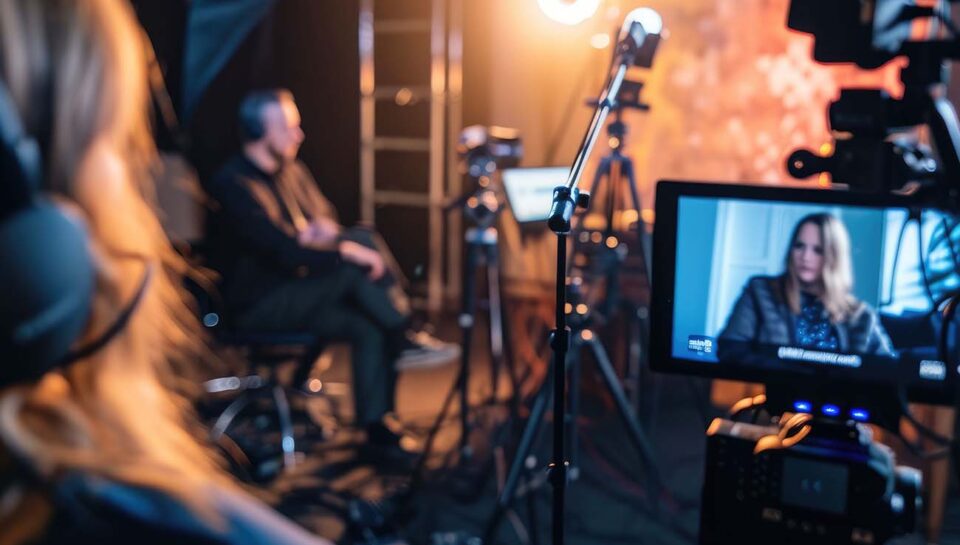
For optimal lighting, place the main light source, or key light, in front of the interviewee. Use a secondary light, or fill light, to reduce shadows and soften the overall look. Finally, add a backlight behind the subject to create depth and separate them from the background.
Tips for Engaging Your Talent
Creating a Comfortable Environment
Start by chatting with your interviewee before the interview starts. Ask about their day or talk about something light to help them relax. Then, explain how the interview will go and what they should expect. This could mean going over the questions you’ll ask or just the general flow. Make sure they’re comfortable with their seat and that the room temperature is just right.
Asking Effective Questions
Start with open-ended ones that encourage detailed responses. For example, instead of asking, “Did you like the project?” you could ask, “What were your thoughts on the project?” This invites a more in-depth answer.
Follow up on their responses with questions that probe deeper, such as, “Can you tell me more about that experience?” or “What made that particular moment stand out to you?”
It’s important to stay neutral and avoid leading questions that could influence their answers. For instance, rather than saying, “Don’t you think this was the best solution?” ask, “How do you feel about the solution?”
This approach helps to get more genuine and unbiased responses.
The Importance of Active Listening
Active listening is really important in an interview. Show you’re genuinely interested in what they’re saying by keeping eye contact and leaning in a bit. For example, if they share a personal story, react naturally and show you care. Give feedback by nodding or saying things like “I see” or “That’s interesting” to encourage them to keep talking.
Be ready to change your questions based on the conversation. If they mention something unexpected or really interesting, ask follow-up questions like, “Can you tell me more about that?” or “How did that make you feel?” This keeps the chat engaging and flowing.
Directing a successful interview requires preparation, technical skill, and the ability to engage your interviewee. Follow these steps to create professional and compelling video interviews.